
SASSA Disability Grant 2026: Complete Application Guide
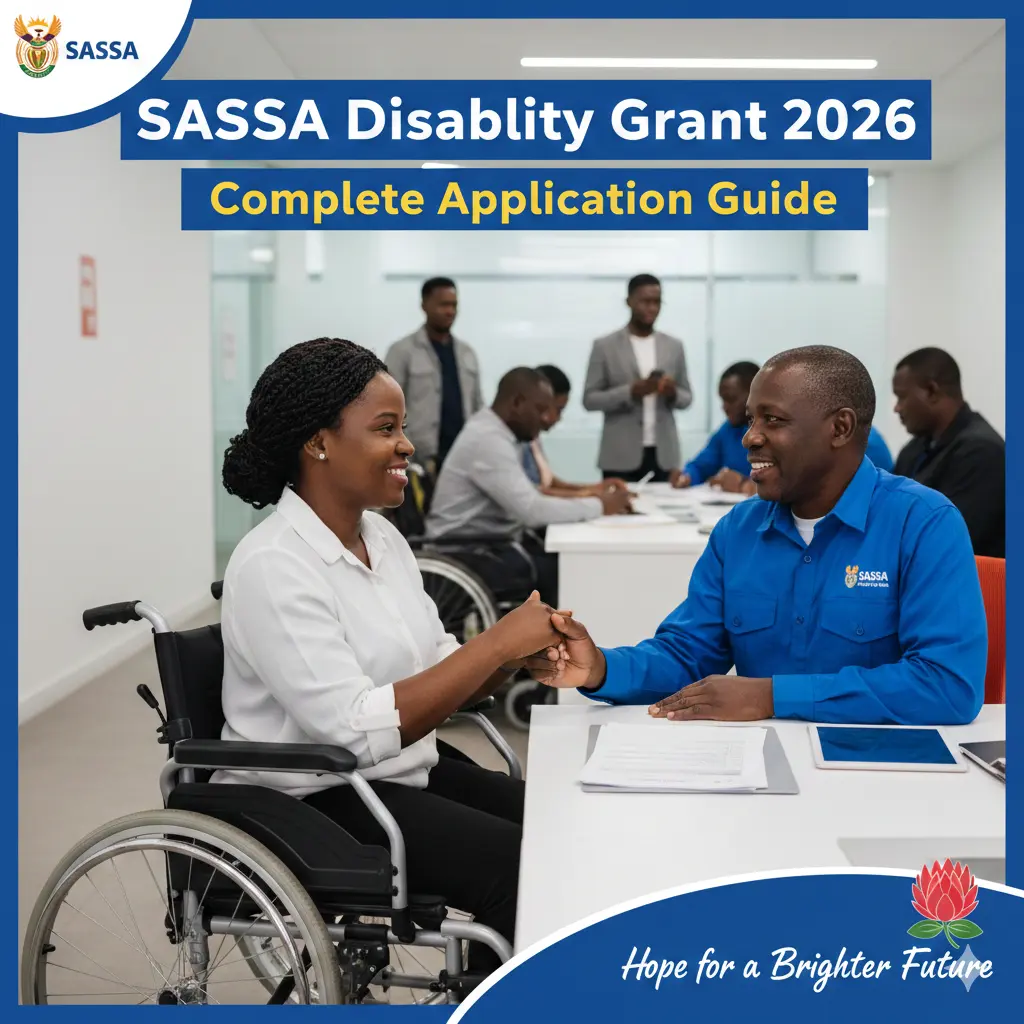
Sipho’s diabetes spiraled out of control in 2024. Complications led to his right leg amputation. At 42 years old, he lost his job as a delivery driver. Bills piled up. His family struggled.
Thank you for reading this post, don't forget to subscribe!A nurse at Groote Schuur Hospital mentioned the Disability Grant. Sipho applied in March 2025. By May, he received his first payment of R2190. The grant didn’t solve everything. But it kept his family afloat while he adjusted to his new reality.
This guide explains everything about the SASSA Disability Grant in 2026. You’ll learn who qualifies, what medical evidence you need, how to apply, and what to do if rejected. No medical jargon. Just practical steps that work.
If you are unemployed but do not have a permanent disability, you may qualify for the SRD R370 Grant instead.
What is the Disability Grant?
The Foster Child Grant supports people who care for children through legal foster care. SASSA pays R1100 per child monthly as of 2026. This grant recognizes the financial burden of raising someone else’s child.
You must have a court order to receive this grant. Informal care doesn’t qualify. A magistrate must officially place the child in your foster care. This legal process protects both you and the child.
The grant differs from the Child Support Grant in critical ways. CSG goes to biological parents or primary caregivers earning below a threshold. Foster Child Grant has no means test. Rich or poor, foster parents receive the same amount.
Court orders last two years typically. You must renew through court before expiry. If the order lapses, your grant stops immediately. SASSA cannot pay without a valid court order.
When you turn 60, your grant automatically converts to the SASSA Old Age Pension without needing a new application.
Who Qualifies for a Disability Grant?
Qualification depends on age, citizenship, medical condition, and income. Each criterion must be met. Missing one causes automatic rejection.
Age Requirements
You must be between 18 and 59 years old. Under 18? Apply for Care Dependency Grant instead. Turn 60? Your Disability Grant converts automatically to Old Age Pension. SASSA handles this transition without new applications.
Children under 18 with severe disabilities should apply for the Care Dependency Grant instead.
Citizenship and Residency
You need South African citizenship, permanent residency, or refugee status. Valid documentation is essential. Asylum seekers with permits qualify if they meet other requirements. Foreign nationals on work permits don’t qualify.
Medical Requirements
Your disability must be medically verified. Physical disabilities include amputations, paralysis, severe arthritis, chronic heart disease, advanced kidney disease, and blindness. Mental disabilities include severe depression, schizophrenia, bipolar disorder, and intellectual disability.
The key question: Can you work in any capacity? If you can perform light duties or work from home, you might not qualify. SASSA assesses total inability to earn income. Partial disability doesn’t automatically qualify.
Means Test Requirements
Your income must fall below specific thresholds. Single applicants cannot earn more than R95,400 annually. Married couples cannot exceed R190,800 annually. SASSA counts all income including rental income, investments, and other grants.
Assets also matter. Single applicants cannot own assets exceeding R1,401,600. Married couples cannot exceed R2,803,200. Your primary residence doesn’t count. But second properties, vehicles, and investments do
How Much is the Disability Grant?
The grant pays R2190 per month as of April 2026. This matches the Old Age Pension amount. SASSA deposits this monthly into your bank account or provides alternative payment methods.
Payment happens on the first of each month typically. Bank transfers arrive fastest. Cash Send vouchers follow within 2-3 days. Post Office collections take up to a week.
You cannot receive multiple grants simultaneously. Disability Grant blocks Child Support Grant for yourself. But your children can receive CSG. The exception is the Grant-in-Aid, an additional R530 monthly if you need full-time care.
Backdated payments aren’t standard. SASSA pays from approval month forward. If you apply in February but get approved in June, you receive June’s payment only. Previous months aren’t covered.
Medical Assessment Process
The medical assessment determines your eligibility. This step confuses most applicants. Understanding it increases approval chances significantly.
You must see a district surgeon or medical officer at a public hospital. Private doctors cannot complete SASSA medical assessments. The assessment is free at public facilities.
Bring all medical records. Hospital discharge summaries, specialist letters, x-rays, blood test results, and medication lists strengthen your case. The doctor needs complete information to assess properly.
The doctor completes a detailed medical report. They describe your condition, treatment history, and work capacity. Be honest about limitations. But don’t exaggerate. Doctors spot inconsistencies.
SASSA sends your report to a medical assessment panel. Independent doctors review it. They decide if you qualify. This takes 30-60 days. The panel’s decision is based purely on medical evidence.
Documents Required for Application
Gathering correct documents prevents delays. SASSA requires originals and certified copies. Here’s exactly what you need.
Essential documents:
- ID document (certified copy within 3 months)
- Medical assessment report from district surgeon
- Proof of income (payslips, bank statements for 3 months)
- Proof of residence (utility bill or affidavit)
- Banking details (account number, bank name, branch code)
- Marriage certificate if applicable
- Divorce decree if applicable
Supporting medical documents:
- Hospital discharge summaries
- Specialist letters and reports
- Recent blood test results
- X-rays or scan reports
- Prescription records showing chronic medication
More documentation increases approval chances. SASSA prefers comprehensive evidence. Don’t assume the doctor knows everything. Provide complete medical history.
How to Apply for Disability Grant
Applications happen in person at SASSA offices. No online applications exist currently. Visit your nearest office with all required documents.
- Schedule your medical assessment first. You cannot apply without the medical report.
- Book appointments early. District surgeons have long waiting lists in some areas.
- Arrive at SASSA early. Morning appointments finish faster.
- The officer reviews your documents and captures information.
- They complete the application form with you. Answer questions honestly.
- You receive a receipt with a reference number. Keep this safe.
- Use it to check application status. The officer explains processing times and what happens next.
SASSA verifies your documents with Home Affairs and SARS. Your medical report goes to the assessment panel. Processing takes 60-90 days typically. Complex cases take longer.
Processing Time and Status Checks
Disability Grant applications take 2-3 months typically. Medical panel reviews cause most delays. Understanding the process helps manage expectations.
- SASSA first verifies your identity and income. This takes 7-14 days.
- Your medical report goes to the panel next. Panel meetings happen monthly.
- If your application arrives just after a meeting, you wait a full month.
- Check your status at any SASSA office. Bring your ID and reference number.
- Officers see your application progress. Online status checks aren’t available for Disability Grant yet.
SASSA sends an SMS when approved or declined. The message includes next steps and reasons. Approved applicants receive payment dates. Declined applicants get appeal information.
You can track progress using our step-by-step guide on how to check your SASSA status online or in office.
Temporary vs Permanent Disability Grants
Understanding the difference helps you prepare for reassessments. The medical panel decides which type you receive.
Temporary grants: Last 6-12 months. Issued for conditions that might improve. Examples include severe depression after treatment, recovery from major surgery, or cancer treatment. You must reapply with new medical evidence before expiry.
Permanent grants: Continue until age 60. Issued for irreversible conditions. Examples include amputations, blindness, paralysis, advanced chronic diseases, or severe intellectual disability. Annual verification happens but rarely gets revoked.
If you receive a temporary grant, mark your calendar for renewal three months before expiry. Start the medical assessment process early. Late renewals cause payment gaps.
Common Rejection Reasons and Solutions
Understanding rejection reasons helps you avoid them. These problems occur repeatedly.
Medical panel declined: The panel determined you can work. Solution: Get second opinions from specialists. Provide more comprehensive medical evidence. Show how your condition prevents any employment.
Income exceeds threshold: Your household earns too much. Solution: Verify exact income calculation. Include all sources. If you’re close to the limit, timing matters. Apply when income is lowest.
Incomplete medical report: The district surgeon didn’t provide enough detail. Solution: Bring comprehensive medical records to the assessment. Ensure the doctor understands your full limitations.
Disability too short-term: Your condition won’t last six months. Solution: Wait until the condition is confirmed as long-term. Provide prognosis documentation from specialists.
How to Appeal a Declined Application
Declined applications can be appealed within 90 days. Appeals often succeed with better medical evidence.
- Visit the SASSA office where you applied.
- Request an appeal form. Complete it thoroughly.
- Explain why you believe the decline was incorrect.
- Attach new supporting documents.
- Updated specialist reports help significantly.
- Letters explaining why you cannot work strengthen appeals.
- Occupational therapy assessments showing functional limitations work well.
Appeals take 60-90 days. A different medical panel reviews your case. They consider all evidence including new documents. If declined again, wait three months before reapplying.
Frequently Asked Questions
Can I work part-time and receive a Disability Grant?
No. Any formal employment disqualifies you. SASSA checks SARS records monthly. Even R1 from registered work triggers cancellation. The grant is for people who genuinely cannot work.
What happens when I turn 60?
Your Disability Grant converts automatically to Old Age Pension. The amount stays the same (R2190). No new application needed. SASSA handles the transition seamlessly.
Can mental illness qualify for a Disability Grant?
Yes. Severe depression, schizophrenia, bipolar disorder, and anxiety disorders qualify if they prevent work. You need psychiatric reports proving the severity. Many mental health conditions receive temporary grants initially.
Do I need to reapply every year?
Depends on your grant type. Permanent grants continue automatically with annual verification. Temporary grants require reapplication before expiry. SASSA notifies you when reassessment is needed.
Can HIV/AIDS qualify for a Disability Grant?
Yes, if AIDS-related complications prevent work. Being HIV positive alone doesn’t qualify. You need documented AIDS-defining illnesses or complications. Many HIV patients on treatment don’t qualify because they can work.
Final Thoughts
The Disability Grant provides essential support for South Africans who cannot work due to disability. The application process requires thorough medical evidence and patience. But the monthly R2190 makes a significant difference.
Remember Sipho from our opening? His amputation changed his life dramatically. The Disability Grant didn’t restore his leg. But it provided financial stability during his most vulnerable time. He now receives R2190 monthly and has adjusted to his new reality.
If disability prevents you from working, apply today. Gather comprehensive medical records. Visit your district surgeon for assessment. Then take your documents to SASSA. The process takes time, but the support is worth it.
For more information, visit www.sassa.gov.za or call 0800 60 10 11. Your local SASSA office can guide you through the application process.